 Reviews



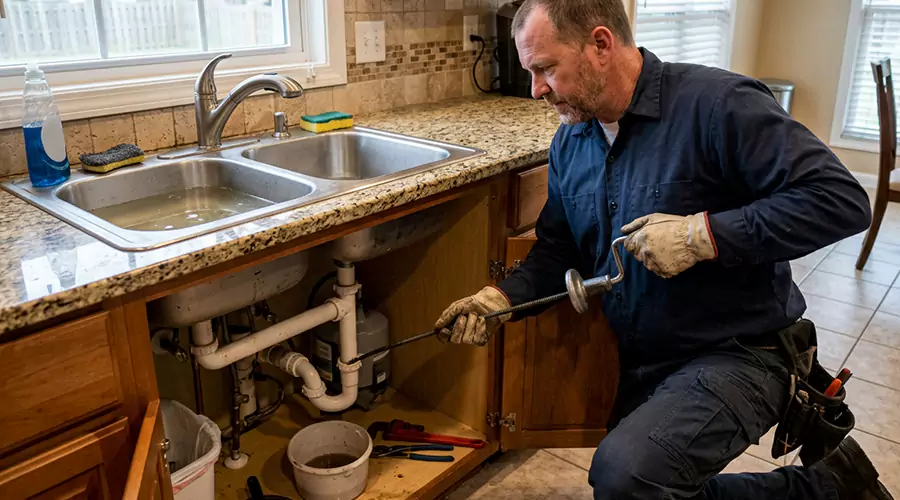
You can often unblock a sink drain using a plunger or flexible drain tool before opening the plumbing beneath the basin. A professional drain-cleaning visit averages $246 in the United States according to August 2026 pricing, so checking accessible blockages first can avoid unnecessary repair costs.
A sink that is already blocked requires a controlled approach. Adding more water or repeatedly pouring cleaning products into a full basin can make the problem harder to manage. Start by creating a safe working area. Then choose a method that matches the material blocking the drain.
What Is the Fastest Way to Unblock a Sink?
The fastest method depends on the obstruction. Visible hair can often be pulled out directly. A soft blockage farther down the drain may respond to a plunger. A deeper obstruction may require a flexible drain tool or manual auger.
Match the method to the likely material:
| Likely Obstruction | Practical Method | Main Advantage |
|---|---|---|
| Hair near the stopper | Flexible hair-removal tool | Physically removes debris |
| Soft nearby blockage | Sink plunger | Uses controlled pressure |
| Debris inside the P-trap | Trap removal | Gives direct access |
| Obstruction inside the branch pipe | Manual drain snake | Reaches deeper material |
| Light surface residue | Physical cleaning | Helps maintain an open drain |
A gradual sequence prevents unnecessary plumbing disassembly. It also reduces the chance of pushing a visible obstruction farther into the system.
What Equipment Do You Need?
Most ordinary sink blockages can be approached with a small selection of household plumbing tools. More equipment is not necessarily better. The aim is to choose the simplest tool capable of reaching the obstruction.
Useful equipment includes:
- Protective gloves.
- A container for standing water.
- A flat cup sink plunger.
- A flexible plastic hair-removal tool.
- A bucket for P-trap inspection.
- A suitable hand auger for deeper obstructions.
- Old towels to protect the cabinet or floor.
Check that the tools are clean and suitable for your drain. A toilet plunger with an extended flange may not form the right seal against a flat sink opening.
How Do You Prepare a Completely Blocked Sink?
A full basin must be managed before attempting mechanical clearing. Removing excess standing water gives you access to the drain and reduces splashing.
Follow these preparation steps:
- Turn off the faucet.
- Stop using appliances that share the affected drain.
- Remove standing water into a suitable container.
- Clear the area around the sink.
- Place towels where spills could occur.
- Wear gloves before touching the drain.
- Inspect the opening for visible objects.
If chemical drain cleaner is already present, do not proceed with ordinary mechanical cleaning until the chemical exposure risk has been addressed. The CDC advises against mixing household cleaning chemicals because hazardous vapors can result.
How Do You Unblock a Sink With a Plunger?
A sink plunger can clear many nearby soft blockages when it forms a strong seal around the drain. Pressure escapes through connected openings, so these must be covered during plunging.
Use the following method:
- Leave enough water in the basin to cover the plunger cup.
- Cover the overflow opening when one is present.
- Seal the second opening on a double sink.
- Position the plunger directly over the blocked drain.
- Begin with a gentle downward movement.
- Maintain the seal while using several controlled strokes.
- Remove the plunger and check drainage.
A working plunging technique requires both pushing and pulling. Maintaining the seal allows those movements to affect the material inside the drain.
How Do You Unblock a Sink Without a Plunger?
A sink can sometimes be unblocked without a plunger when the obstruction sits close to the opening. Bathroom sink hair often collects around the stopper. Kitchen sinks can hold food directly beneath the strainer.
The first alternative is physical removal. Take out the stopper or strainer and inspect the opening. Use a flexible plastic tool to retrieve accessible debris.
Another option is to inspect the P-trap if surface cleaning produces no improvement. For light residue in a drain that still moves water, careful cleaning with dish soap and appropriately hot water may help. However, a dense physical obstruction generally needs direct removal.
How Do You Unblock a Sink With a Drain Snake?
A manual drain snake is useful when material sits beyond the reach of a plunger or flexible plastic tool. The cable travels into the drainage pipe and can capture hair or disturb an obstruction.
Follow this procedure:
- Remove the stopper or access the wall-side pipe after taking off the P-trap.
- Insert the snake gradually.
- Rotate the handle as the cable advances.
- Stop when resistance increases.
- Work the cable gently at the resistance point.
- Pull the cable back slowly.
- Remove captured debris.
- Repeat only when progress is visible.
Avoid forcing the cable when resistance remains completely unchanged. A drain snake can reach farther into the plumbing than a small hair-removal strip.
Can You Unblock a Sink With Household Cleaning Products?
Household cleaning products are sometimes useful when a sink contains only minor residue. However, chemical reactions are not a substitute for removing a complete physical blockage.
Baking soda and vinegar create a bubbling reaction. This may help disturb light surface material, but it does not reliably remove a compacted obstruction. Never mix household cleaning products with commercial drain opener.
Avoid pouring another product into standing water when you do not know which chemicals are already present. The safer first approach for ordinary debris is physical removal.
How Do You Know the Sink Has Been Unblocked?
An unblocked sink should handle normal water flow without developing another puddle. A short improvement is not enough to confirm that the obstruction has been fully removed.
Test the sink gradually:
- Run a small amount of water.
- Check whether it leaves normally.
- Increase the flow.
- Continue for approximately one minute.
- Stop the water.
- Observe the remaining drainage.
- Inspect accessible joints for leaks.
If the sink becomes slow again under sustained flow, additional material may remain.
When Should You Call a Professional?
Professional drain cleaning is appropriate when the blockage remains after reasonable mechanical attempts or affects several plumbing fixtures. A repeated blockage can indicate that material remains in a section inaccessible to household tools.
Typical professional drain cleaning costs range from $147 to $352 in the United States in 2026. More extensive drainage problems can require additional work.
Seek professional diagnosis when:
- The drain remains completely blocked after using a manual auger.
- Several sinks or other fixtures are affected.
- Wastewater returns through another plumbing opening.
- A recurring blockage returns immediately.
- Accessible piping shows visible damage.
- Clearing attempts create or reveal leaks.
A professional can inspect deeper sections of drainage piping and select equipment suited to the actual obstruction.
How Can You Prevent Another Complete Blockage?
Preventive maintenance is particularly useful after a complete blockage because some material may still be collecting near the drain opening. Keeping that area clean limits the amount that reaches the deeper pipes.
Recommended habits include:
- Clean visible debris from stoppers and strainers.
- Remove bathroom hair before it enters the drain.
- Keep food residue out of kitchen sinks.
- Dispose of cooking grease separately.
- Check drainage speed regularly.
- Address repeated slow drainage before the sink stops completely.
Early maintenance is simpler than managing a basin full of standing water.
Conclusion
Learning how to unblock a sink drain starts with controlling standing water and selecting the correct tool. Remove accessible debris first. Use a plunger for a nearby soft blockage and a manual snake when the obstruction sits deeper. Avoid mixing cleaning chemicals. If several fixtures become blocked or household tools cannot restore drainage, professional investigation may be appropriate. Check your drain strainer this week and remove accumulated material.
Frequently Asked Questions
Can I unblock a sink without removing the P-trap?
Yes. A plunger or flexible drain tool can clear some obstructions without opening the plumbing.
Should I keep plunging when nothing changes?
No. Several unsuccessful attempts suggest that another method or deeper inspection may be needed.
Can hot water unblock a completely stopped sink?
Hot water is not a reliable solution for a dense physical obstruction. It can also create an overflow problem when the sink is full.
Is a flexible plastic drain tool better than a snake?
The plastic tool is useful for shallow hair buildup. A drain snake reaches deeper obstructions.
Why does the sink unblock and then stop again?
Part of the original obstruction may remain inside the pipe and continue collecting debris.